Osteopathy, Physiotherapy & Wellbeing in Leeds
Expert practitioners providing personalised, evidence-based care to help you feel your best.
Good Health in Good Hands
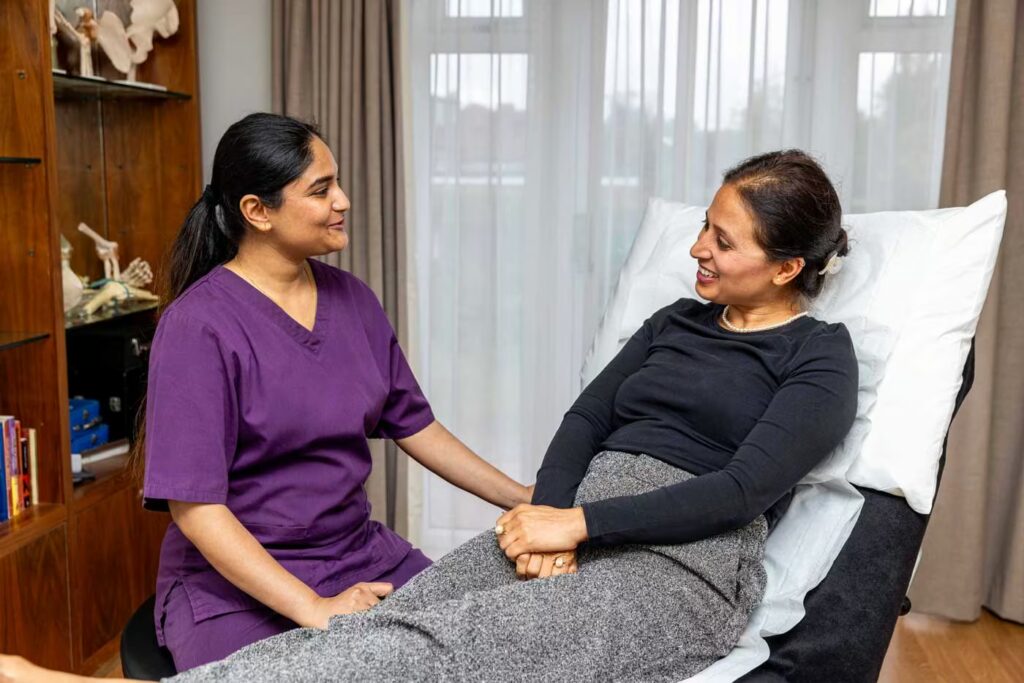
You can trust that you’re in good hands with all our experienced, registered practitioners and that you’re one step closer to good health outcomes when you walk through our front door.
Diverse breadth of healing disciplines
Experienced, registered practitioners
Welcoming, accessible facilities
Served our community since 1993
Convenient booking
and same-day availability
Integrated, multi-disciplinary approach
Serving our community for over 30 years
Unique patients treated
Appointments serviced to date
Practitioners providing excellent care
Years of combined clinical experience
Excellent patient reviews
Serving our community for over 30 years
Unique patients treated
Appointments serviced to date
Practitioners providing excellent care
Years of combined clinical experience
Excellent patient reviews
Our practitioners have expertise spanning a variety of treatment disciplines
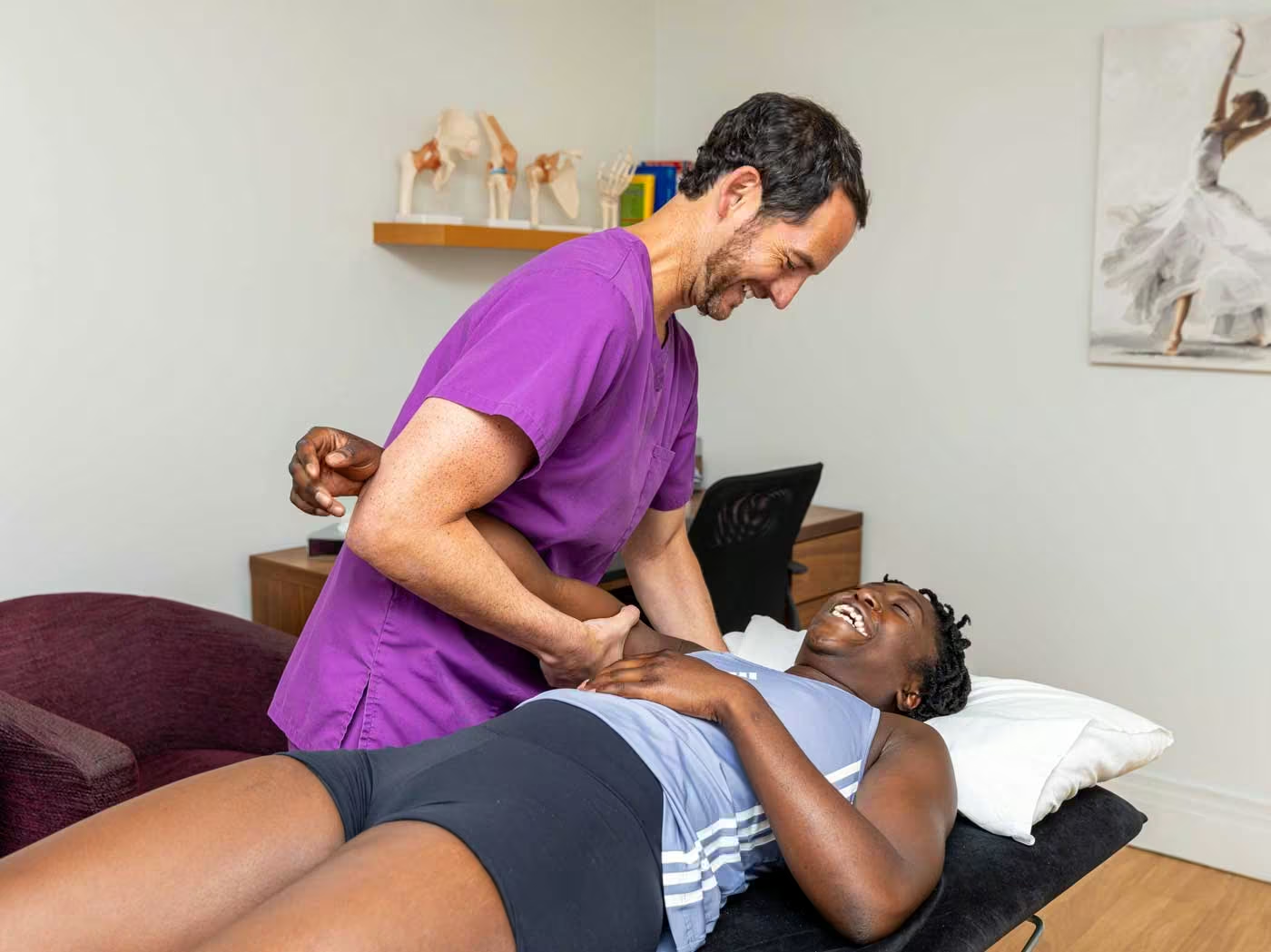
We treat a variety of conditions
We take an integrated approach to healthcare
We take a holistic, whole-body approach, looking at how different parts of the body affect each other, to identify and treat the root cause of the issue you’re facing. Our highly qualified practitioners work together as a multi-disciplinary team, providing you with a truly integrated treatment plan.
Our approach
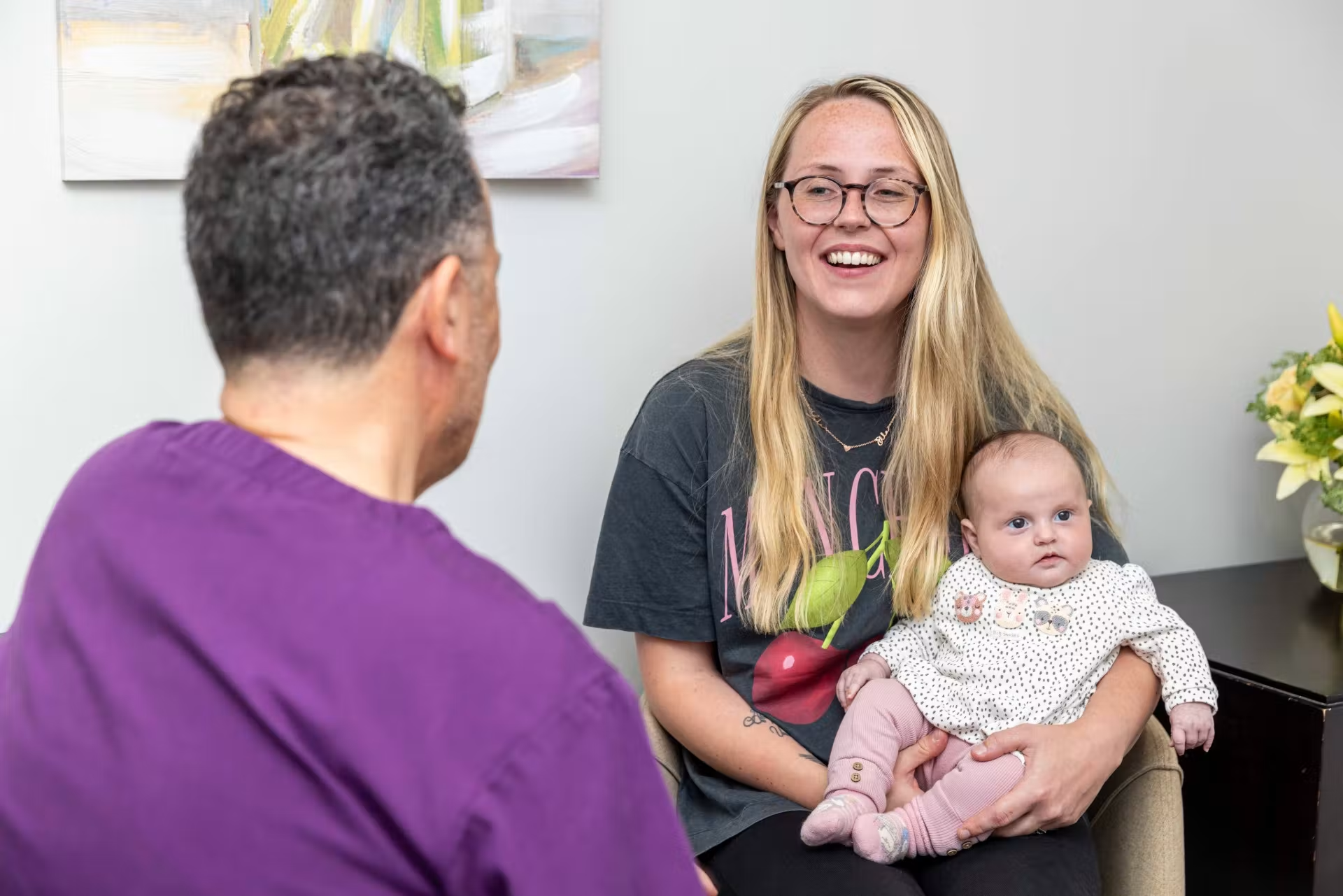
- Listen: We dedicate time at the beginning of your treatment journey and at every appointment to better understand you and your health concerns
- Assess: We use a variety of clinical tests and conduct a comprehensive assessment to understand the root-cause of the issue you’re facing
- Diagnose: We share and explain our findings, along with the potential outcomes of treatment options
- Plan: We develop a personalised treatment plan just for you that may include complementary therapies available at our multi-disciplinary clinic
- Treat: We will treat with care, guiding you every step of the way
Trusted by Our Leeds Community
EXCELLENTTrustindex verifies that the original source of the review is Google. Some years ago, I was advised my by GP to try Osteopathy. Upon a self referral, I now attend regular Osteopathy treatment at The Good Health Centre. Louise Alexander, is my qualified Osteopathy Practitioner. The Osteopathic treatment I receive is not only for musculoskeletal pain, eg:. spondylosis, back pain etc. Also for other medically diagnosed mobility issues and health related conditions. Prior to each treatment a brief consultation ensues. Highlighted health concerns are raised, and discussed. From this Louise makes an assessment and focuses on an specific individual treatment session. I find this frequent treatment beneficial and positive towards controlling pain relief in partnership with my GP prescribed medication. I would certainly recommend this treatment.Posted onTrustindex verifies that the original source of the review is Google. I have been seeing Louise monthly for over 20 years for osteopathy for over 20 years. I have Multiple Sclerosis and she has made a vital contribution in helping me to maintain my mobility. She is always very friendly, considerate and understanding.Posted onTrustindex verifies that the original source of the review is Google. I highly recommend Good Health Centre. I’ve been seeing Emily for my back pain for a few years now, and she has been amazing. The advice and treatment are always excellent, and the entire team is incredibly friendly and professional. Absolutely spot on service every time!Posted onTrustindex verifies that the original source of the review is Google. I’ve been having treatment at the Good Health Centre for a couple of months now. You always get a warm welcome from the lovely receptionists who instantly make you feel relaxed. Emily has been treating me and she really is a true star. She is calm and professional at all times with a lovely, polite manner. She is considerate in her treatment, acknowledging and being sympathetic to the condition she is dealing with and this discomfort it’s causing. I would have no hesitation in recommending her services.Posted onTrustindex verifies that the original source of the review is Google. I’ve been seeing Emily regularly for around one year. I am incredibly impressed by her holistic approach and kindness. The reception staff are always very friendly and the surroundings to wait in are comfortable and relaxing. Recommend!Posted onTrustindex verifies that the original source of the review is Google. I was recommended Louise Alexander for Osteopathy at the GHC by my Mum who has been seeing Louise for many years now. I was struggling with lower back pain from my job working with 3/4 year old children, so a lot of lifting, bending and sitting on ridiculously small chairs! Louise listened carefully, physically assessed me and set out her treatment plan for me. She recommended how regularly I would need to see her and we revisited the plan at timely intervals adjusting visits as and when necessary. My back has never felt better and stronger from the exercises she suggested I do at home to complement her treatment. I was in great hands to the point I still see Louise every 6 weeks or so for regular maintenance…. A wonderful Osteopath and an extremely lovely human….. cannot recommend her enough. Thanks LouisePosted onTrustindex verifies that the original source of the review is Google. Amazing service and friendly staff. Emily is great, very knowledgeable and will help support with additional exercises outside of treatments. My regular check ins alongside appropriate exercise has really helped mr manage my condition. I would highly recommend her to anyone.Posted onTrustindex verifies that the original source of the review is Google. The Good Health Centre has a strong range of specialists for specific conditions, with a long-standing team who cross-refer where appropriate. I've had excellent experiences over many years for a range of issues for which osteopathy has been curative. Louise's wisdom, expertise and skills are superb and have truly helped with her gentle yet profound touch. Doug is always excellent and available for emergency Epley Manoeuvre, and also he has successfully treated my chronic tennis elbow with shockwave therapy. The Reception team know their stuff and are great at finding the right practitioner - and appointment times. Thank you GHC team.Posted onTrustindex verifies that the original source of the review is Google. I have always had a very friendly and efficient service from the good health centre staff. I have been seeing Emily regularly and she keeps my back issues under control. She is very friendly and makes me feel comfortable during treatment. I would recommend her to anyone needing an osteopath.Posted onTrustindex verifies that the original source of the review is Google. Great place. Emily is a joy to see,shes very friendly, very knowledgeable and professional. Would definitely recommend.Verified by TrustindexTrustindex verified badge is the Universal Symbol of Trust. Only the greatest companies can get the verified badge who has a review score above 4.5, based on customer reviews over the past 12 months. Read more
Why choose us?
- Fully qualified and registered osteopaths, physiotherapists, and other experienced practitioners
- Diverse breadth of healing disciplines across 20+ practitioners
- Integrated, multi-disciplinary treatment protocol, all under one roof
- Over three decades of experience at our Leeds-based clinic
- Welcoming and accessible facilities fit for all patients
- Convenient booking with availability on weekdays and Saturdays, allowing for prompt delivery of treatment